At the beginning of 2025, the global ocean freight market appeared to be stabilizing. New vessel capacity helped bring shipping rates down, supply chains became more predictable, and many importers hoped the disruptions of recent years were finally behind them.
Fast forward to 2026, and the picture has changed dramatically.
Freight costs are climbing once again. The Shanghai Containerized Freight Index (SCFI), one of the world’s leading indicators for container shipping rates, has more than doubled since the beginning of the year. For companies sourcing products from Asia, that’s a clear signal that supply chain volatility is far from over.
But what’s driving this latest spike in freight rates? And more importantly, what can businesses do to minimize the impact?
What Is the Shanghai Containerized Freight Index (SCFI)?
The Shanghai Containerized Freight Index (SCFI) is one of the most widely recognized benchmarks for global container shipping prices. It tracks spot rates for container shipments from Shanghai to major ports around the world.
When the SCFI rises, shipping costs typically increase as well. For companies importing apparel, consumer goods, electronics, furniture, or other products from Asia, the index serves as an early warning indicator for higher transportation costs and potential supply chain disruptions.
Freight Cost Trends from 2024 to 2026
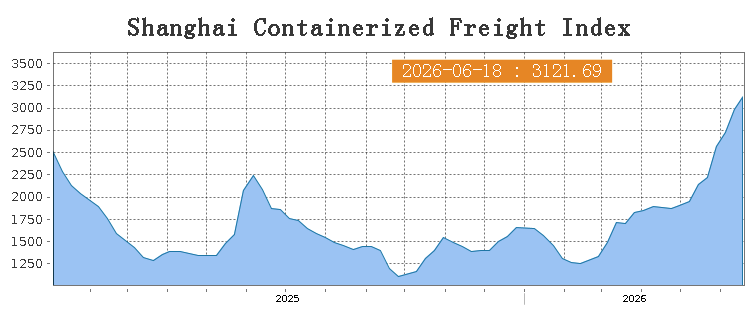
Figure 1: Development of the Shanghai Containerized Freight Index (SCFI) from 2024 through June 2026. After a period of declining freight rates, the sharp increase in early 2026 highlights renewed pressure on global shipping markets.
Why Are Freight Costs Rising Again?
The current surge isn’t caused by a single event. Instead, several geopolitical and economic factors are putting pressure on global shipping networks at the same time.
1. Ongoing Disruptions in the Red Sea
Since late 2023, attacks on commercial vessels in the Red Sea have significantly disrupted international shipping routes. Many ocean carriers continue to avoid the Suez Canal, choosing instead to reroute vessels around the Cape of Good Hope.
These detours add up to two weeks to transit times, tie up vessel capacity, and reduce the availability of shipping equipment. The result is higher transportation costs across global trade lanes.
2. Rising Tensions in the Middle East
Additional uncertainty stems from ongoing tensions involving Iran and the Strait of Hormuz, one of the world’s most critical maritime chokepoints.
Even as political tensions fluctuate, increased security measures, war risk premiums, and operational restrictions continue to drive shipping costs higher.
3. Frontloading Is Driving Additional Demand
At the same time, many U.S. importers are accelerating shipments ahead of anticipated tariff increases. This strategy, commonly known as frontloading, has created another wave of demand for already limited shipping capacity.
When demand rises while capacity remains constrained, freight rates tend to increase rapidly – and that’s exactly what’s happening today.
How Rising Freight Costs Impact Supply Chains
Higher freight rates affect far more than transportation budgets. They create ripple effects throughout the entire supply chain.
Companies are increasingly facing challenges such as:
- Higher sourcing and transportation costs
- Reduced profit margins
- Longer transit times
- Less predictable delivery schedules
- Increased inventory carrying costs
- Higher prices for end customers
Organizations purchasing goods under FOB (Free on Board) terms are particularly vulnerable because they are responsible for ocean freight costs themselves. Every rate increase has a direct impact on their landed costs and overall profitability.
The Bigger Challenge Isn’t Cost. It’s Visibility
Rising freight costs are only part of the problem.
The real challenge is identifying disruptions early enough to respond effectively.
Which purchase orders are delayed? Which suppliers are affected? Which customer deliveries are at risk? And what actions should be taken first?
Many companies still struggle to answer these questions because critical information is spread across emails, spreadsheets, ERP systems, and logistics providers. By the time delays become visible, opportunities to reduce their impact have often already passed.
That’s why end-to-end supply chain visibility has become a critical competitive advantage.
Companies that have real-time access to orders, shipments, suppliers, and inventory can make faster decisions and respond proactively instead of reactively.
Five Ways Companies Can Respond to Rising Freight Costs
While businesses can’t control geopolitical events, they can strengthen their ability to respond.
1. Increase Real-Time Supply Chain Visibility
Early visibility into shipment delays enables faster and more informed decision-making.
2. Identify Risks Before They Escalate
Centralized data helps companies understand which orders, suppliers, and shipments are most affected.
3. Diversify Supplier Networks
Reducing dependency on individual suppliers or sourcing regions helps improve long-term resilience.
4. Optimize Safety Stock Levels
Strategic inventory buffers can reduce the impact of transportation delays without unnecessarily increasing inventory costs.
5. Make Decisions Based on Data
Modern supply chain management platforms provide the transparency needed to evaluate risks, prioritize actions, and keep operations moving.
Volatility Is Becoming the New Normal
Even if geopolitical tensions ease in the coming months, most experts don’t expect freight costs to return to pre-pandemic levels anytime soon.
Environmental regulations, geopolitical conflicts, shifting trade policies, and structural changes across the shipping industry are all contributing to a more volatile global logistics environment.
For supply chain leaders, the question is no longer whether another disruption will occur. It’s how prepared their organization will be when it does.
Conclusion: Visibility Is the Foundation of Supply Chain Resilience
The latest surge in freight costs is another reminder that today’s supply chains are deeply connected to global events.
Businesses can’t prevent geopolitical disruptions, but they can improve how they respond.
Organizations that monitor their supply chains in real time, identify risks early, and make decisions based on reliable data are better equipped to control costs, maintain delivery performance, and protect customer satisfaction.
In an increasingly unpredictable world, supply chain visibility is no longer just an operational advantage. It’s the foundation of a resilient and competitive supply chain.