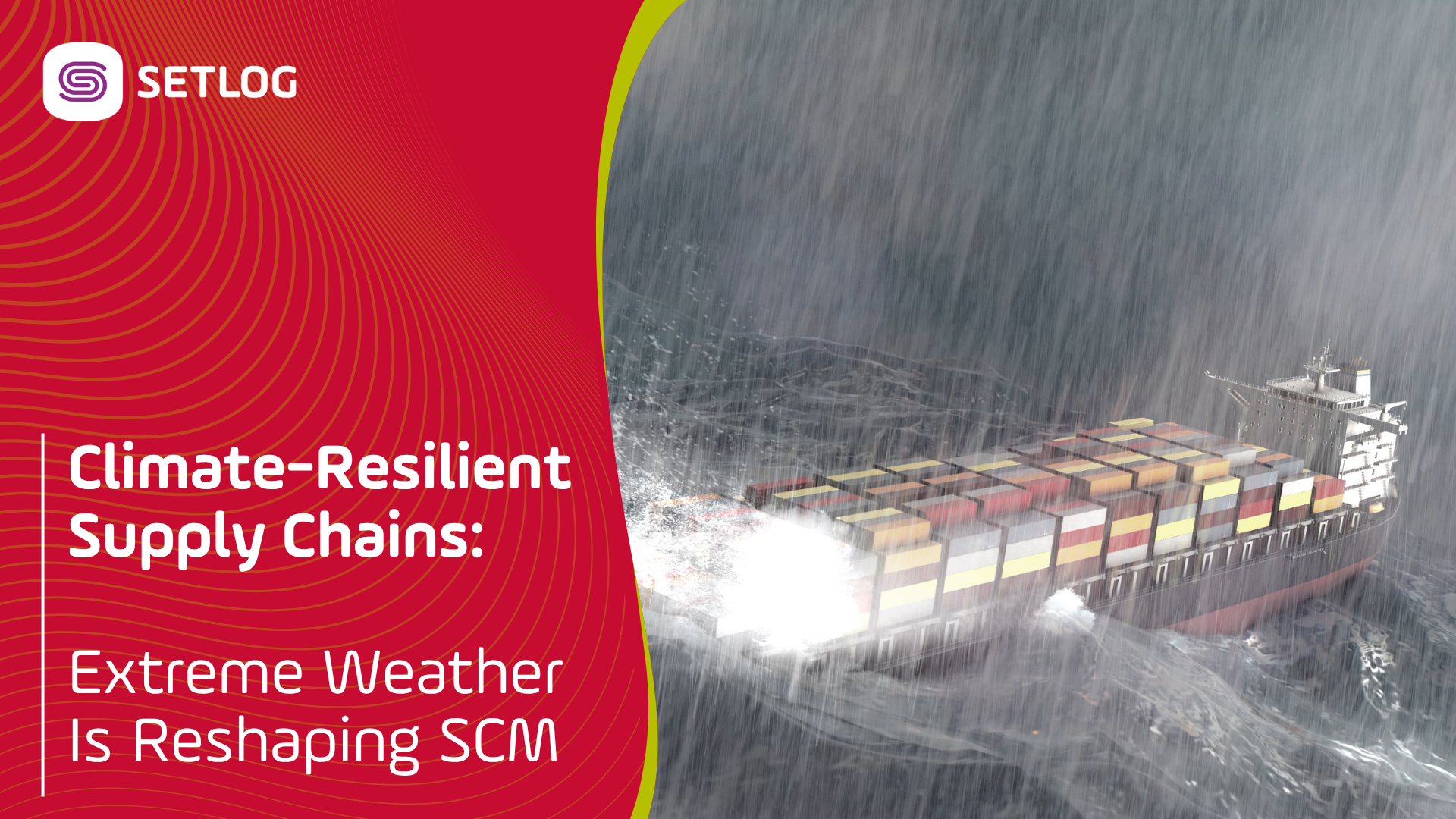
For years, climate risk was primarily viewed as a sustainability issue. In 2026, that perspective is changing. Extreme weather events are no longer affecting only environmental goals or regulatory requirements. They are increasingly impacting the stability of global supply chains.
As a result, climate resilience is becoming an operational supply chain priority. Floods, droughts, heat waves, and severe storms are affecting transportation networks, manufacturing locations, and the availability of critical resources. The question is no longer whether companies will face climate-related disruptions, but how well prepared they are to manage them.
Across the Top 10 Supply Chain Management Trends 2026, one message is becoming increasingly clear: resilient supply chains must become more than digital and transparent. They must also be capable of adapting to a changing physical environment.
Climate Risk Is Becoming Operational Risk
Climate-related disruptions are occurring more frequently and are having a growing impact on global supply networks. While supply chains have traditionally focused on economic and geopolitical risks, another factor is rapidly gaining importance.
Extreme weather events can disrupt production capacity, block transportation routes, and affect the availability of raw materials within a matter of days. The interconnected nature of modern supply chains makes these disruptions particularly challenging. A localized weather event can quickly create ripple effects across multiple regions and supplier tiers.
For companies, climate risk is no longer a future concern. It is already influencing delivery performance, planning reliability, and cost structures today. Organizations that wait until disruptions become visible often lose valuable time when responding.
Critical Infrastructure Is Under Increasing Pressure
The impact is especially visible in critical infrastructure. Ports, highways, rail networks, and waterways form the backbone of global supply chains, yet many of these systems are becoming increasingly vulnerable to changing climate conditions.
Extended droughts can reduce capacity on major waterways and slow transportation flows. Flooding can damage logistics facilities and transportation corridors. Heat waves place additional strain on energy grids and can disrupt manufacturing operations. Many of these systems were built for different environmental conditions and are increasingly being pushed beyond their original design limits.
This creates a new layer of uncertainty for supply chain leaders. Even when suppliers perform reliably and demand forecasts remain accurate, infrastructure disruptions can slow or interrupt entire supply networks. Climate resilience is therefore becoming a question of network stability as much as operational performance.
Climate Resilience Is Reshaping Supply Chain Design
The increasing frequency of extreme weather events is forcing companies to rethink how their supply chains are structured. The focus is shifting from individual facilities or transportation routes to the resilience of the entire network.
Supplier evaluations are increasingly incorporating risk-related factors alongside traditional criteria such as cost, quality, and capacity. Exposure to weather-related disruptions, infrastructure reliability, and the availability of energy and water are becoming important considerations. Locations that were once viewed as stable and predictable may now present new vulnerabilities.
At the same time, companies are reassessing their transportation and production strategies. Alternative routes, additional sourcing options, and regionally diversified networks may introduce greater complexity, but they also improve adaptability. The objective is not to eliminate every risk. It is to maintain operational flexibility when disruptions occur.
As a result, the conversation is shifting from pure efficiency toward long-term resilience. Organizations that proactively adapt their networks today will have more options available when conditions become more challenging tomorrow.
Resilience Becomes a Long-Term Competitive Capability
Many of the defining developments in supply chain management ultimately serve the same purpose: making supply chains more resilient in an increasingly uncertain world. AI, platformization, scenario planning, and autonomous operations all help organizations identify risks earlier and respond more effectively.
Climate risk highlights an important reality, however. Technology alone is not enough. Resilient supply chains must also account for physical vulnerabilities and adapt to changing environmental conditions. The ability to operate through uncertainty is becoming a core strategic capability.
In that sense, climate resilience provides a fitting conclusion to the Supply Chain Management Trends 2026. The past several years have demonstrated that disruptions can emerge from many different directions. The organizations that succeed will not be those that simply react to change. They will be the ones that design supply chains capable of performing under changing conditions.